These are some of the works I'm most proud of. Reach out to me
for some more details.
Volvo 2026 Internship
Maintenance Cost Calculation Tool 2.0
Converting an old microsoft powerapp to a modern python
webapp
Summary:
Tech Stack: Python (Nicegui, SqlAlchemy), Databricks, Azure
services like Azure Devops (and their .yml format) Azure
Entra, MSSQL Server and Azure Data Factory. I got accepted
into a Janurary 2026 co-op position in the Engineering
Maintainability team. My job involved some data analyst work
(making powerBIs, reports) with a lot of software
engineering work.
The biggest project I worked on was the Maintenance Cost
Calculation Tool 2.0. I basically took this slow, buggy
powerapp that was used by 40 Maintainability Engineers
across 5 countries and made it into a modern Python Webapp.
On top of creating the app in a new technology and
framework, I spent a lot of time on optimizing costs speed.
The speed increase ranges from 5x-50x. I got this by making
a lot of calls asynchronous (so when we have a page that
needs 10 sql queries, we do 10 at once instead of doing them
1 by 1) and by using caching whenever I could (nicegui has
user.storage.client for in-browser storage).
We also have massive cost improvements too. I spent a lot of
time making our notebooks that are ran manually into jobs
that are ran automatically on weak, cheap clusters
overnight. I also made it so we used Volvo's shared compute
rather than provisioned resources from Microsoft. Our
biggest win was turning a ~30 minute job into one that was
~4 hours at 4% of the cost.
DiscussDock
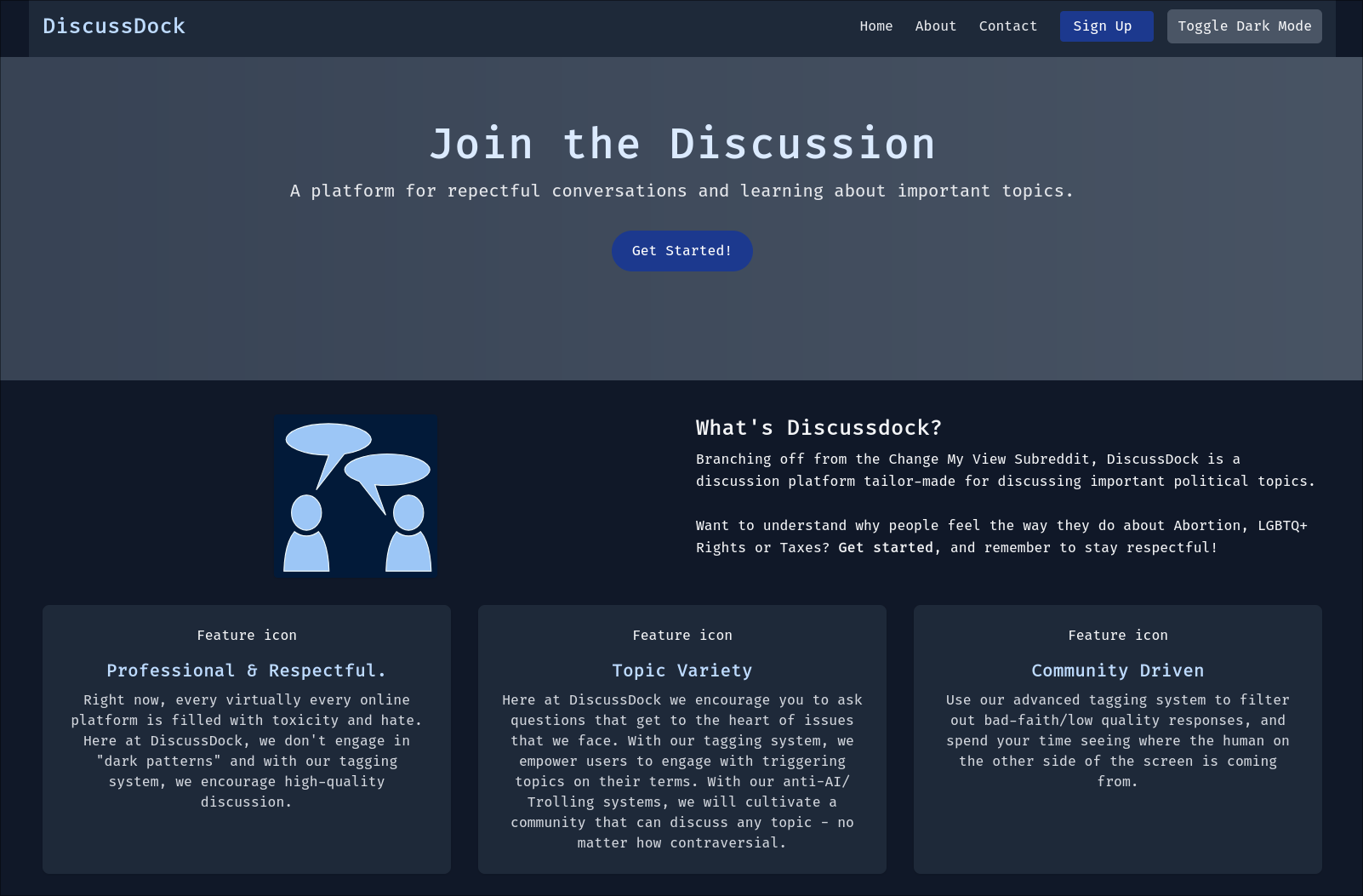
Creating a full stack social media website Spring-Summer
2025.
Social media is toxic and full of tracking. People cannot
express themselves and ask honest questions. I want to fix
that.
Summary:
Tech stack: Docker, Github actions, Go, Html + CSS (Tailwind
css, DaisyUI), Python (llm finetuning, data set collection),
Mongodb (atlas)
Complex Objective: Create an anonymous social media website
that utilizes a fine tuned LLM to reduce toxicity and
enforce professionalism.
Status: Mostly done. Server costs are getting high,
and I'm out of google cloud tokens. The site is in
maintenence mode (9/12/2025) and I'm deep into grad school.
Because it's anonymous, it's hard for me to get donations
and to form a community.
Key takeaways: I can build a lot. I can make something to
fix a real life problem. However - an overwhelming majority
of social media users are mobile, and they have an important
set of expectations. If I don't have an explosive set of
users up front, it's hard to have users trickle in over
time.
Make sure to have people you think are cool check out the
site! I've got so much help developing this from family and
friends. It's good to branch out to non-technical people,
and see what they think aobut your work. I'm a strong
believer of "diversity is a strength". Get diverse
viewpoints!
Check it out here!
ERC - HAMMER Digital Twin Development
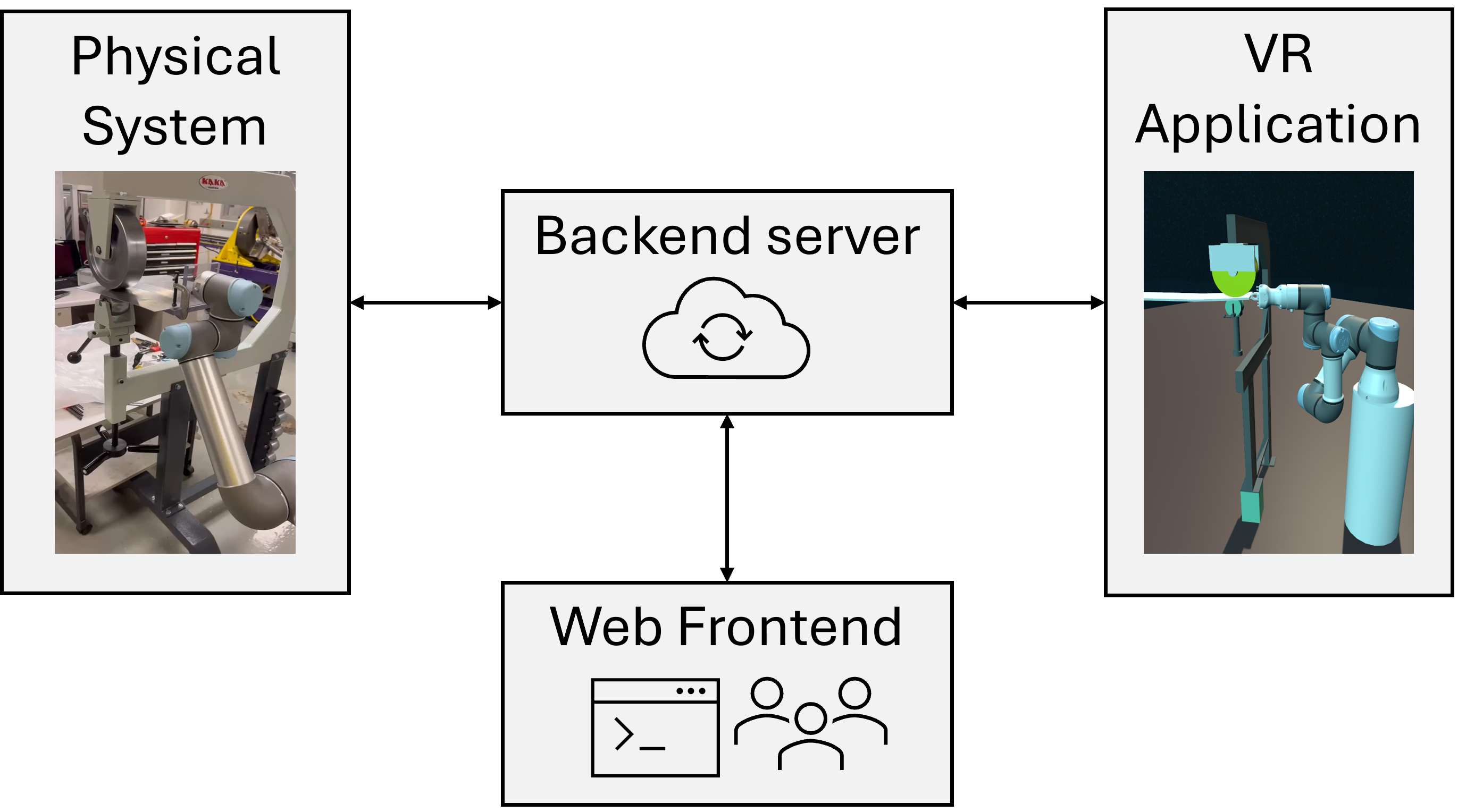
Creating a digital twin backend Fall 2023 - Fall 2024
In this project, I led a team of around 3-5 students to
create an extremely complex AI-powered digital twin for
English Wheel Forming.
To summarize:
Tech stack: Docker, Github actions, Go, Html + CSS, Python,
Unity3d
Complex Objective: Create a bi-directional low-latency real
time communication backend that is able to support multiple
concurrent users, disparate file formats with secure data
transfer.
Status:
Successful, with a scientific elsevier paper awaiting
publication (as of 12/27/2024)
Key takeaways: I now understand what it takes to create
robust full-stack applications. Performance matters.
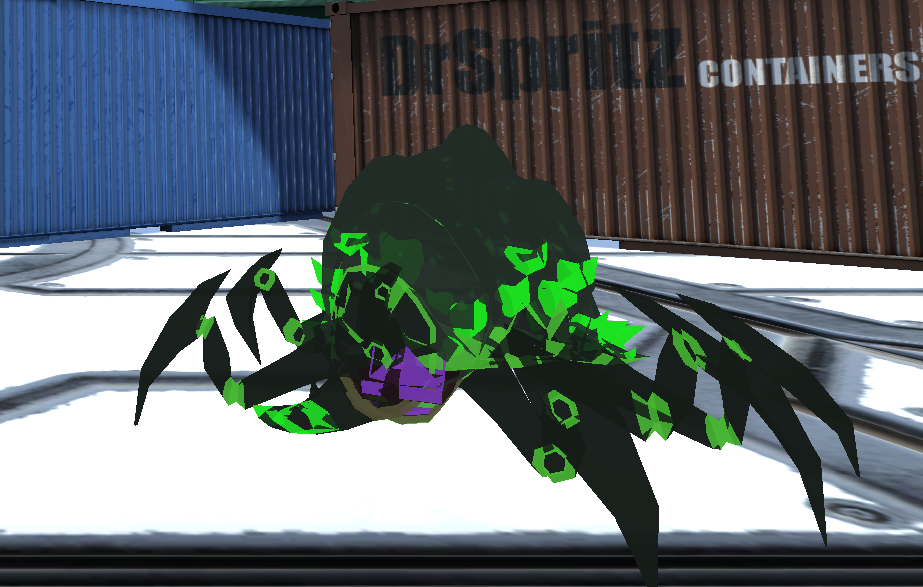
Goober's strange escape - a video game (and my senior
project)
Creating high-quality real-time enemy AI Fall 2023-Spring
2024.
Tech stack: C#, Google Cloud, Unity3D.
This game is a first person co-operative wave shooter about
playing a group of test subjects who are fighting against a
bunch of monsters.
My responsibility: Implementing
Goal-Oriented-Action-Planning into a real-time networked
video game.
This was difficult. The AI worked by analyzing the state of
the world, and then making plans to maximize damage dealt to
the player.
(Simplified) Enemy rifler control flow:
-
Enemy patrols a zone, uses a collision detection
algorithm and randomized directional movement algorithm
to find an area that's open.
-
After a few cycles of this, the enemy will randomly
decide to: Get a better gun, use their ears to hunt down
the player, or group up with its allies.
-
Once a player is spotted, the enemy will move quickly
alongside a circumference around the player.
-
The enemy will strafe and shoot until the player dies.
-
If they run out of ammo, they will either try and melee
the player or run for more ammo (depending on health
amounts, and a random value)
-
If they get hurt, they get a teleportation ability and
run away to get health.
Key takeaways: How real-time, multithreaded game AI works.
How to work as a democratic team.
Play it here!
Energy usage simulation - Revit & Unity3d
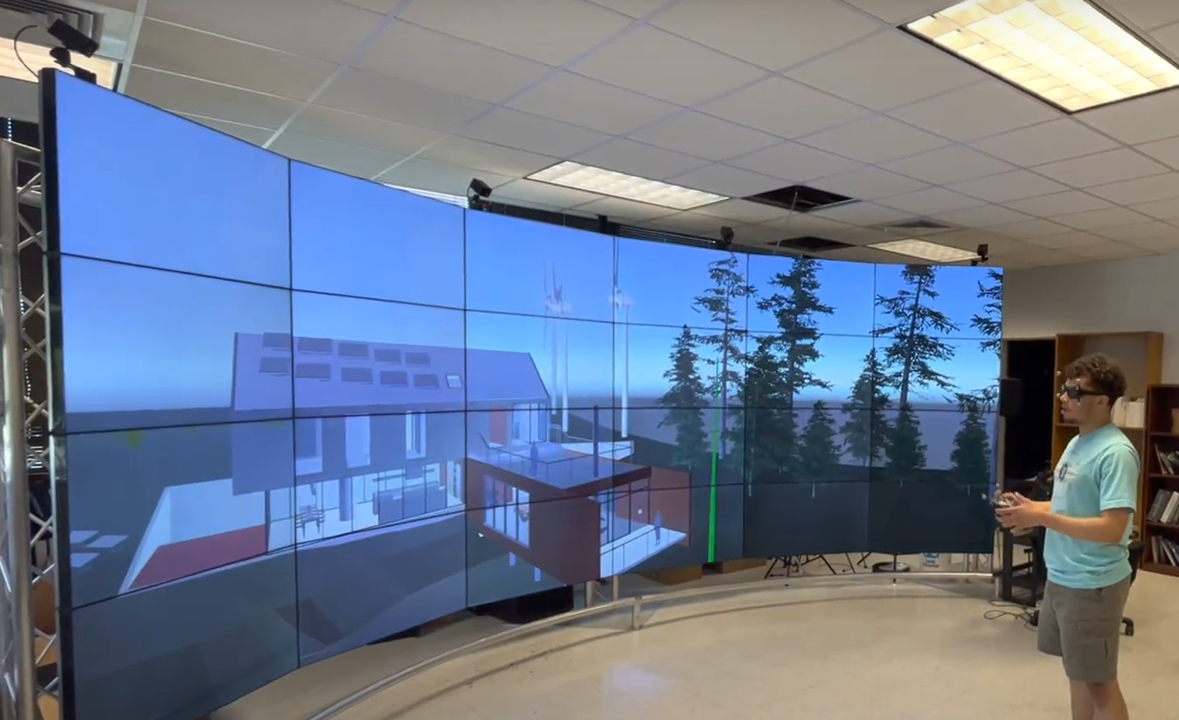
Modelling energy usage Summer 2022
My team of three used historical and synthetic datasets on a
CAD (Revit) model to simulate energy usage/generation for a
modern eco-friendly home. We then took all of this data and
placed it into Unity3d, where all it was visualized in a
real-time and interactive environment.
To summarize:
Tech stack: Revit, Python, Matlab, Kaggle datasets (energy
usage & generation), Unity3d
Status: Successful, with plans to expand with further Key
takeaways: This was my first time working with synthetic
datasets, and I understand how/why they are so commonly
used. This is also where I first understood the value of
putting things in interactive 3d environments.
Watch it here! (Google Drive Link)